Networks: From Proof of Concept to Customer-Facing Product
This is a design case study which was co-designed with Cursor, co-authored with Claude and went through more iterations than I'd like to admit.
Summary and challenges
I designed the end-to-end experience for Networks, Celonis' answer to business partners losing sight of each other mid-process. An org mandate shifted our project goals mid-stream, the work moved across three teams, and we had to catch up on org-wide design goals and initiatives.
Outcome
Shipped a successful beta launch of Networks with three business partners.
Context: Project Networks
Networks lets business partners in a shared process see the same truth, instead of each side only seeing their own half.
Picture ordering equipment from a supplier. Along the way, things quietly go wrong on both sides: a sales order gets lost, a delivery runs late, a price shown to you is already outdated. Each of these causes delays, disrupts your process, and costs money. Neither side has full visibility into why, because each is only looking at their own system.
Our team built the first application of Networks for Order Management, giving buyers and suppliers a shared view of the same order lifecycle. So a lost order, a late delivery, or a stale price is visible and actionable by both sides, not discovered after the fact.
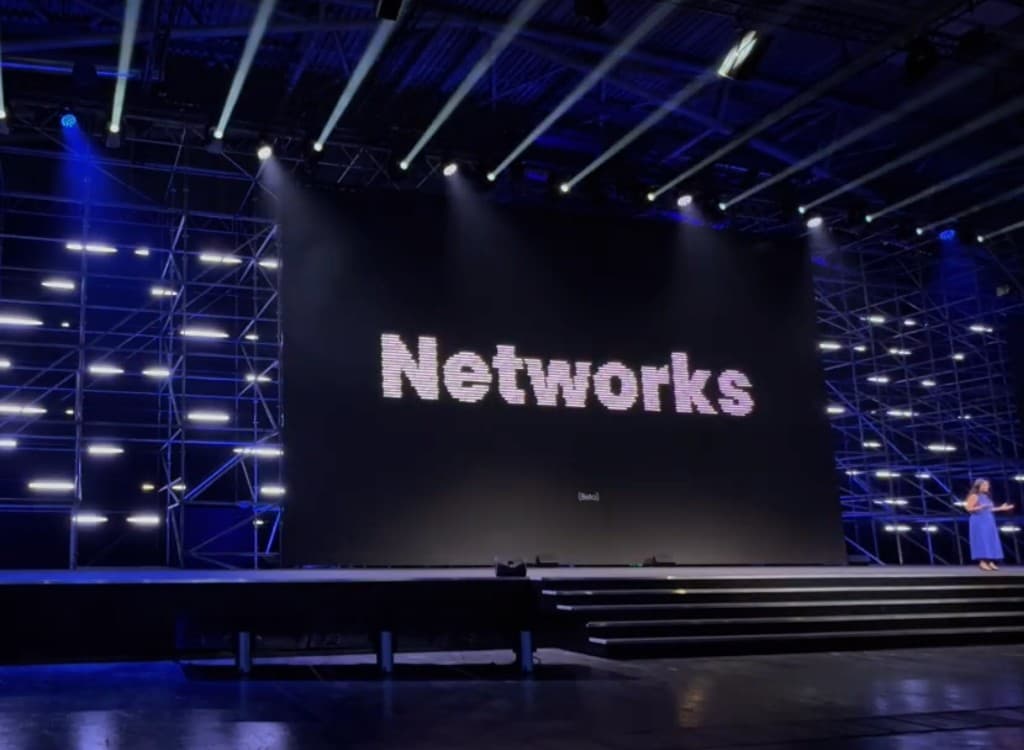
Product announcement on CelonisSituation
My team owned a proof of concept (POC) of Networks and was tasked with proving use cases with our business partners. We ran this POC on a separate infrastructure from Celonis's platform as the initial goal was a throw away prototype to move fast and test our assumptions. I co-led user validation with my manager to test whether the business case, desirability, and scalability held up.
We proved our hypothesis. That success however came with a mandate to immediately productize it.
Task
The mandate extended into productization: turn the validated POC into a customer-facing capability on our real platform.
- Use design to ease the learning curve created by integrating our infrastructure with the main platform, which introduced complex journeys for users
- Recover platform UI consistency debt accumulated during the fast, validation-first POC phase, bringing the experience up to full design system compliance
- Stay aligned with design patterns* emerging across other squads in parallel, so Networks would feel like part of one product
* Design patterns: cross-product UI conventions (e.g., consistent rule-builder layouts, or standardizing on modal vs. accordion vs. dedicated page for creation flows) established centrally at the org level to create consistency and harmony in your product.
Action
Revised the existing POC design into a production-ready journey, as heavy scoping introduced new journeys driven by the platform's technical architecture. I owned the full source-to-target data journey end to end, working closely with PMs and engineers, and ran further rounds of user validation against it.
Additionally, I absorbed added complexity through microcopy to prevent scope creep where larger design interventions weren't feasible.
UI debt and design pattern aligned
- Set up recurring syncs across squads to align on design patterns and avoid reinventing the wheel
- Designed UIs to scale with the ever-growing backlog, avoiding rework and preventing decisions from becoming an untracked “black box”
- Got PM buy-in to scope in more involved design changes needed to comply with an org-wide pattern-standardization initiative. These were not my initiative, but I rallied to pull in as many of Networks' open pattern questions as possible
Adapted my workflow with AI to keep pace with a moving target.
- As a byproduct of engineers repeatedly changing requirements on the integration flow, I shifted from building Figma screens to shaping interaction logic directly in Cursor, working in the actual codebase
- This led to faster iteration. Changes lived in code instead of screens that the next revision would invalidate and a tighter handoff with engineering as design and implementation were now expressed in the same artifact
- One of the earliest instances of AI-assisted design workflow adoption in the organization; it changed how I approached design during periods of technical uncertainty going forward
Defended and challenged decisions under real pushback
Situation: the project moved to a new team, and the incoming PM challenged my already-scoped, timeline-aligned UI debt plan as unnecessary
Task: protect the highest-impact fixes without blowing the private preview deadline
Outcome: negotiated down to what was achievable, landing a ~70% reduction rather than the full plan while keeping the highest-impact fixes intact
Result
Networks shipped into private preview with its first customers!
Reduced platform UI consistency debt by an estimated ~70% compared to the POC
Positive partner feedback on both usability and feasibility during validation
Announced in beta at Celosphere, Celonis' annual conference

Learnings
- Extend the system when the use case outruns it. Cross-boundary, multi-partner flows like Networks often sit outside what a design system was built for, so the work becomes stretching the system, not just applying it.
- Alignment is real work when patterns have no owner. When similar patterns emerge across squads with no shared standard, you have to find the other designers and negotiate an approach that holds.
- POC infrastructure can hide production constraints. Separate infrastructure lets you validate fast, but integration issues often only surface once you productize. Especially true alongside parallel migrations and tight timelines.