Zalando: Gifts with Purchase solution exploration
Overview
Unlike its direct competitors, Zalando Beauty had not yet included gifts with purchase in its user experience.
In this project, we explored integrating Gifts with Purchase (GwP) based on specific Zalando Beauty campaigns.
- Duration
- 6 weeks
- Project status
- Paused until spring 2023
Roles and responsibilities
- – Workshop facilitation*
- – Competitor benchmarking
- – Parallel work stream dependency explorations and alignment
- – Ideation with the team*
- – Solution exploration (awareness and evaluation)
- – Solution exploration (purchase and post purchase)*
*My roles and responsibilities
Background
Strategic objective and the customer problem
Zalando Beauty’s goals for 2025 target increasing Net Merchandise Value per customer. Gift with Purchase programmes help with this, and are a non-discounted incentive for Zalando customers to try beauty products.
GwP offers have become a standard incentive in the beauty industry, used by beauty brands to reward customers and strengthen relationships with them. As a result, beauty customers in the EU have come to expect gifts with at least some of their beauty purchases.
Potential beauty customers who already shop for fashion at Zalando don’t consider buying beauty products there, because their expectation of a competitive value proposition isn’t met.
Problem statement
Based on user research and the outcome of a brief usability test, we deduced that customers…
Opportunity area: how might we…
- – …give a high value for money perception using gifts with purchase, and make customers feel they are getting a good deal on Zalando?
- – …promote the delight factor in the Beauty digital experience using gifts with purchase?
Design strategy
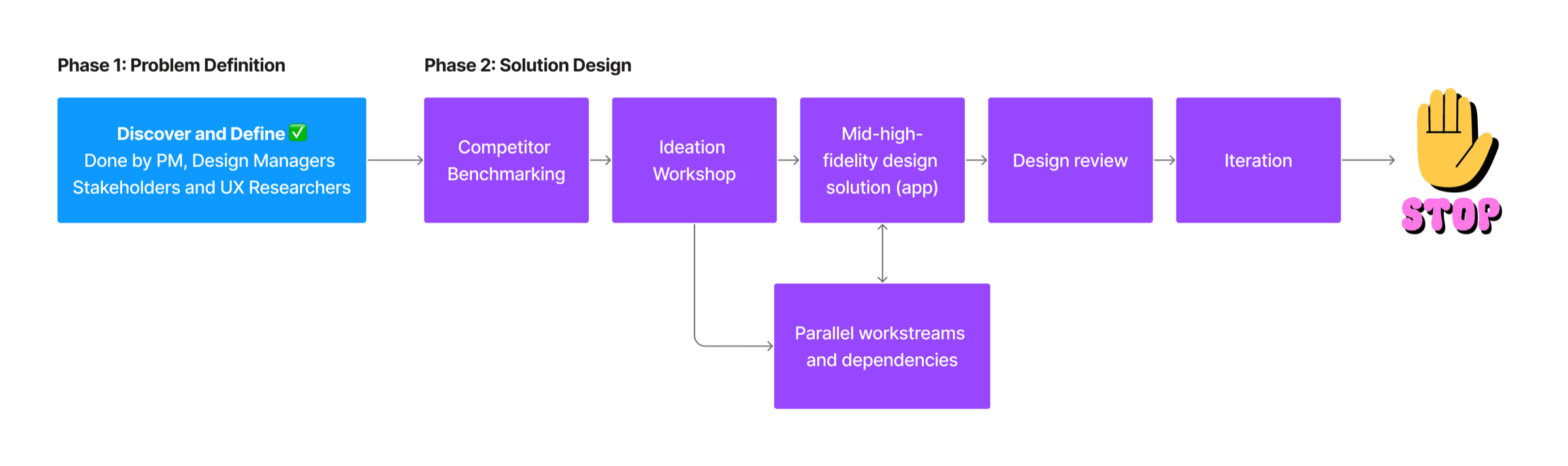
Solution design
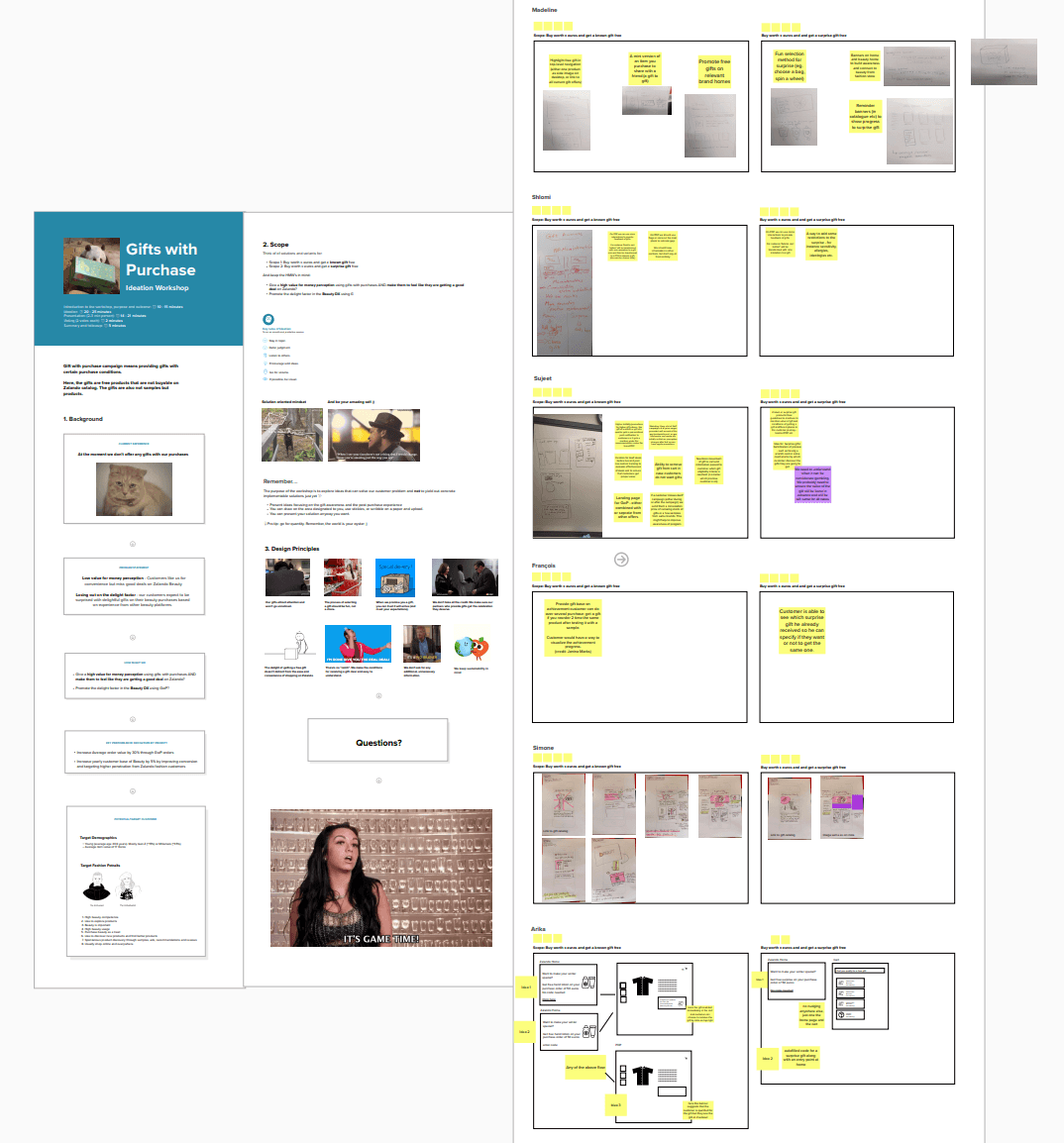
Ideation workshop
The ideation workshop was held remotely and lasted 1 hour and 30 minutes. The participants were:
- – 2 product designers
- – 1 mobile developer
- – 1 back end engineer
- – 1 content designer
- – 1 beauty buyer
- – 1 business developer
Goal of the workshop
Explore ideas that could solve the customer problem. The purpose was not to produce concrete, implementable solutions, but to explore broadly and brainstorm approaches focused on gift awareness and the post purchase experience.
Why was the purchase experience excluded?
Explorations around the cart would have been fairly redundant, as many solutions could undermine the cart’s main purpose of ensuring a smooth checkout. We wanted to focus on the touchpoints and ideas that aid discovery and the post purchase experience.
Scope of the ideas
- – Scope 1: Buy items worth x euros and get a known gift for free
- – Scope 2: Buy items worth x euros and get a surprise gift for free
Ideation outcome
Many solutions focused on marketing touchpoints, navigation and a dedicated catalogue for gifts with purchase. Some also involved awareness on the product description page (PDP).
Mid to high fidelity solution design
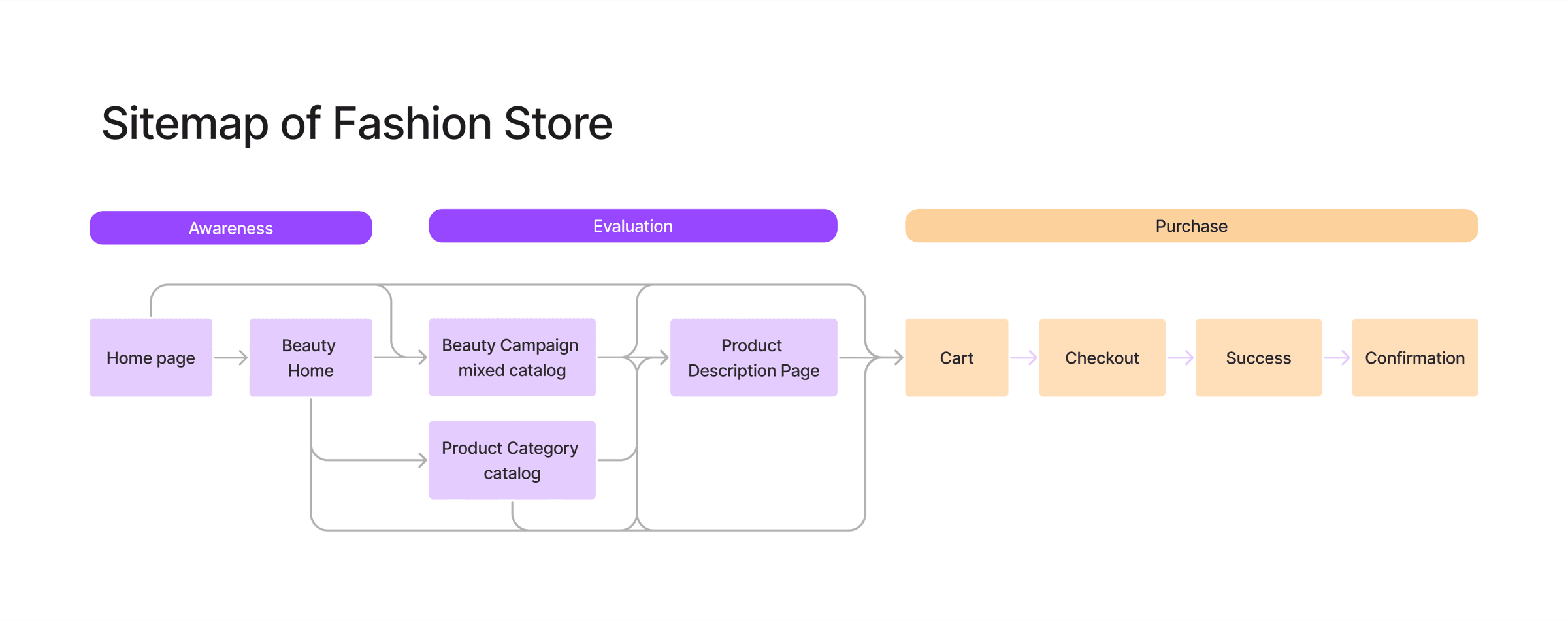
After defining the problem statement and reviewing the outcome of the ideation workshop, the principal designer and I divided the solution exploration into awareness, evaluation, purchase and post purchase. I was responsible for purchase and post purchase. The explorations covered the cart, checkout and success screens, and were adapted to the upcoming modular checkout, which will replace express checkout.
This study focuses on the explorations in the purchase and post purchase flow.
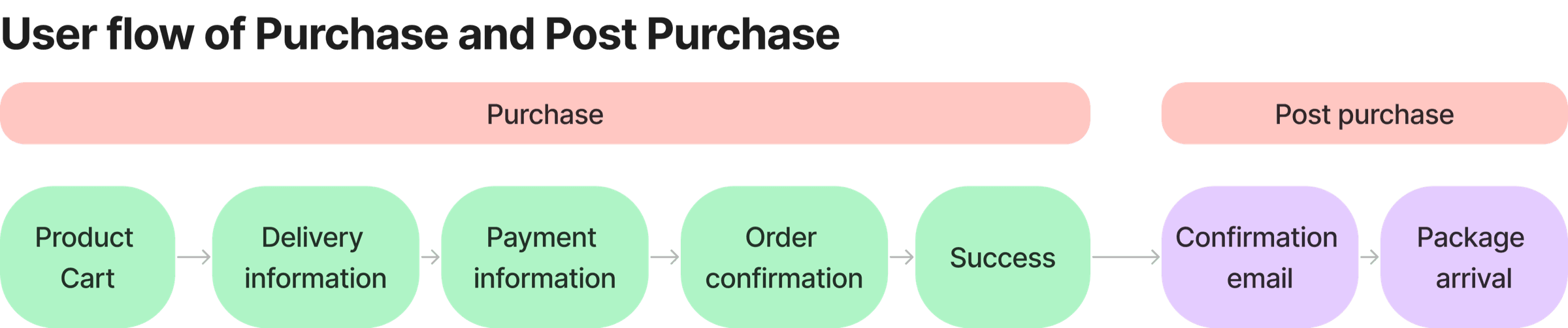
The explorations of the cart, checkout, confirmation and success screens were shaped by these campaigns:
- – Buy items worth 49 euros from Moschino and get a Moschino Toy Bubble Gum for free
- – Buy items worth 49 euros from anywhere on Zalando and get a beauty set from Armani for free
- – Buy items worth 139 euros from anywhere on Zalando and get a mystery gift for free
Below are the first and second iterations of the product cart, and the edge case of gifts and vouchers in the modular checkout.
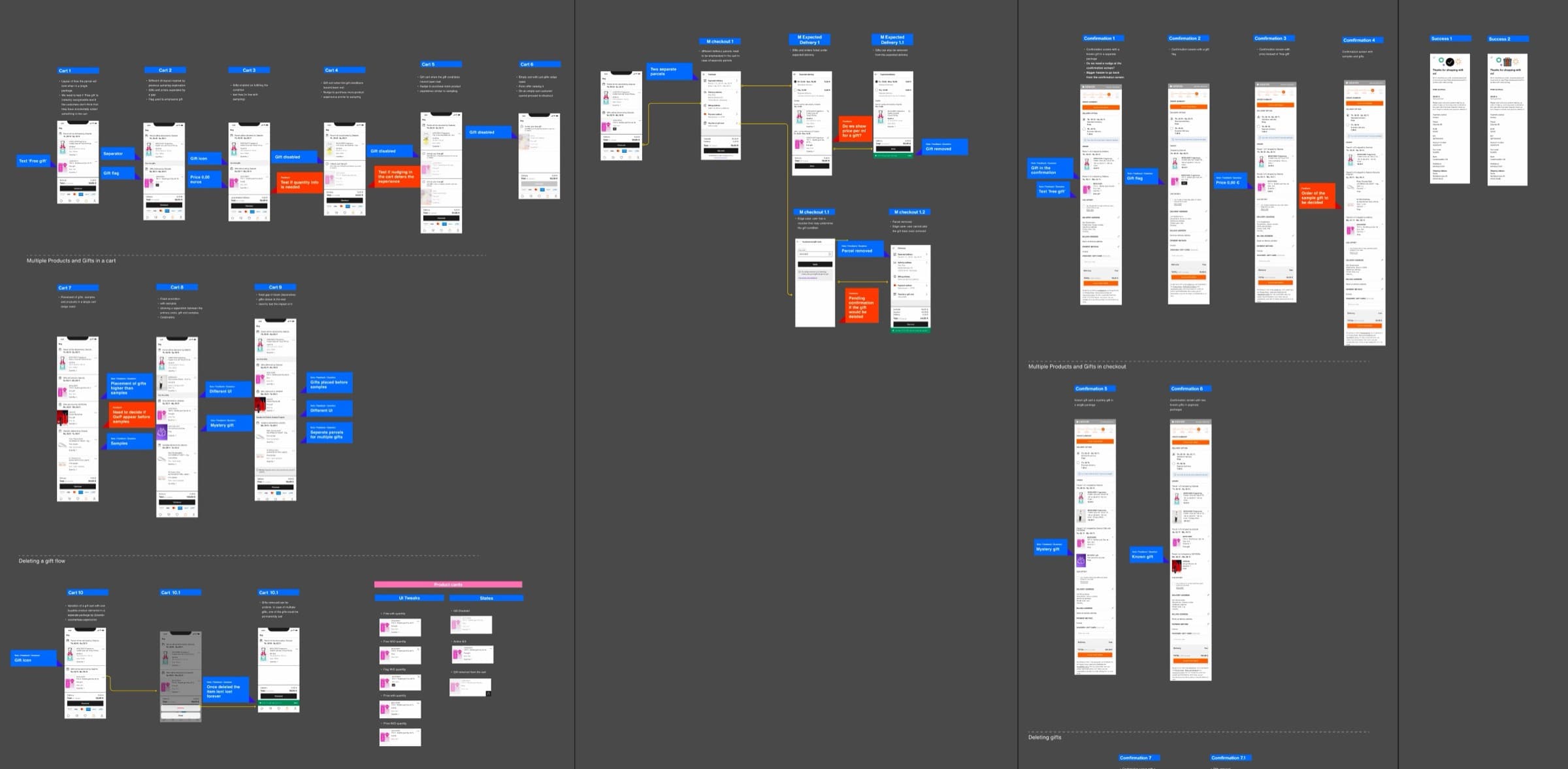
First iteration of the product cart
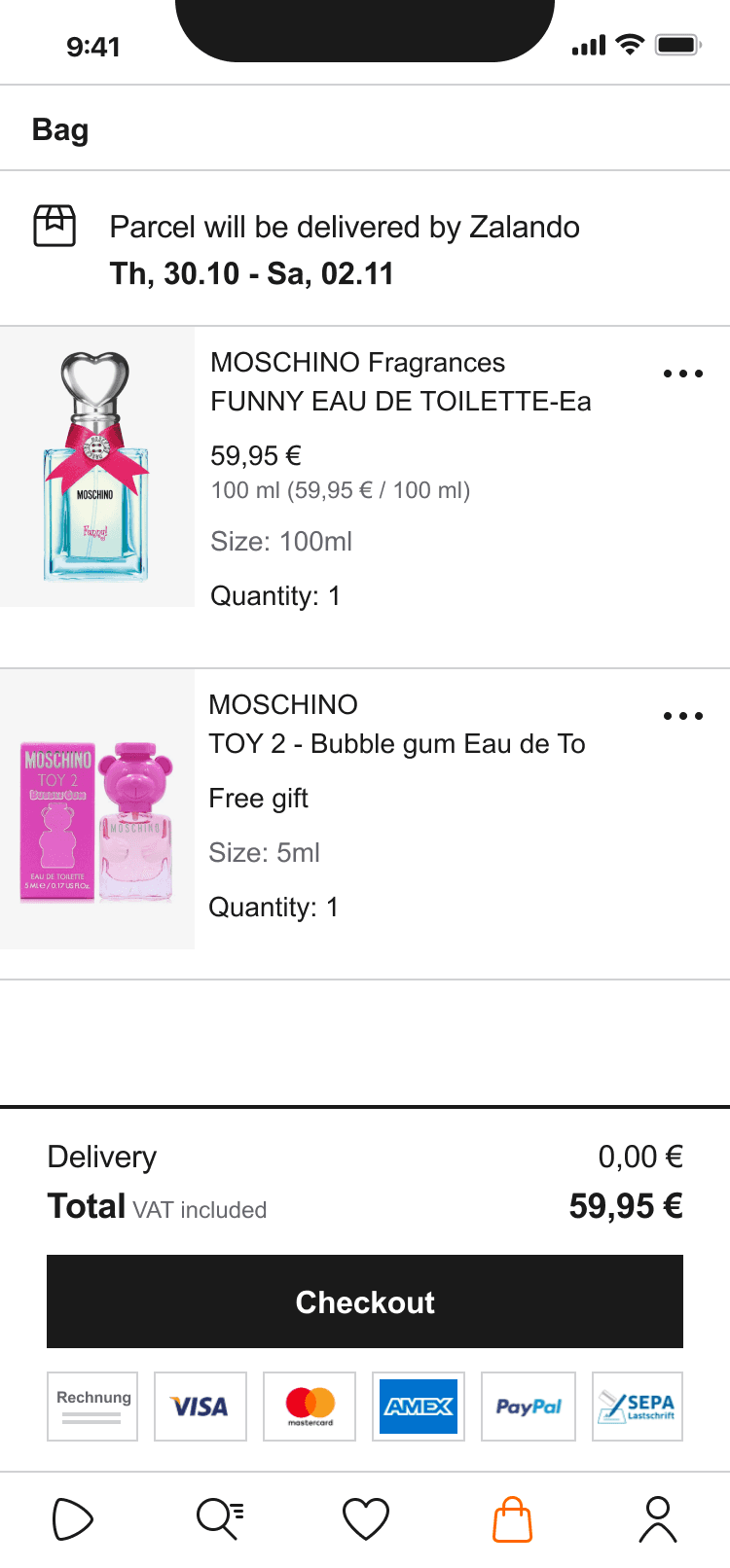
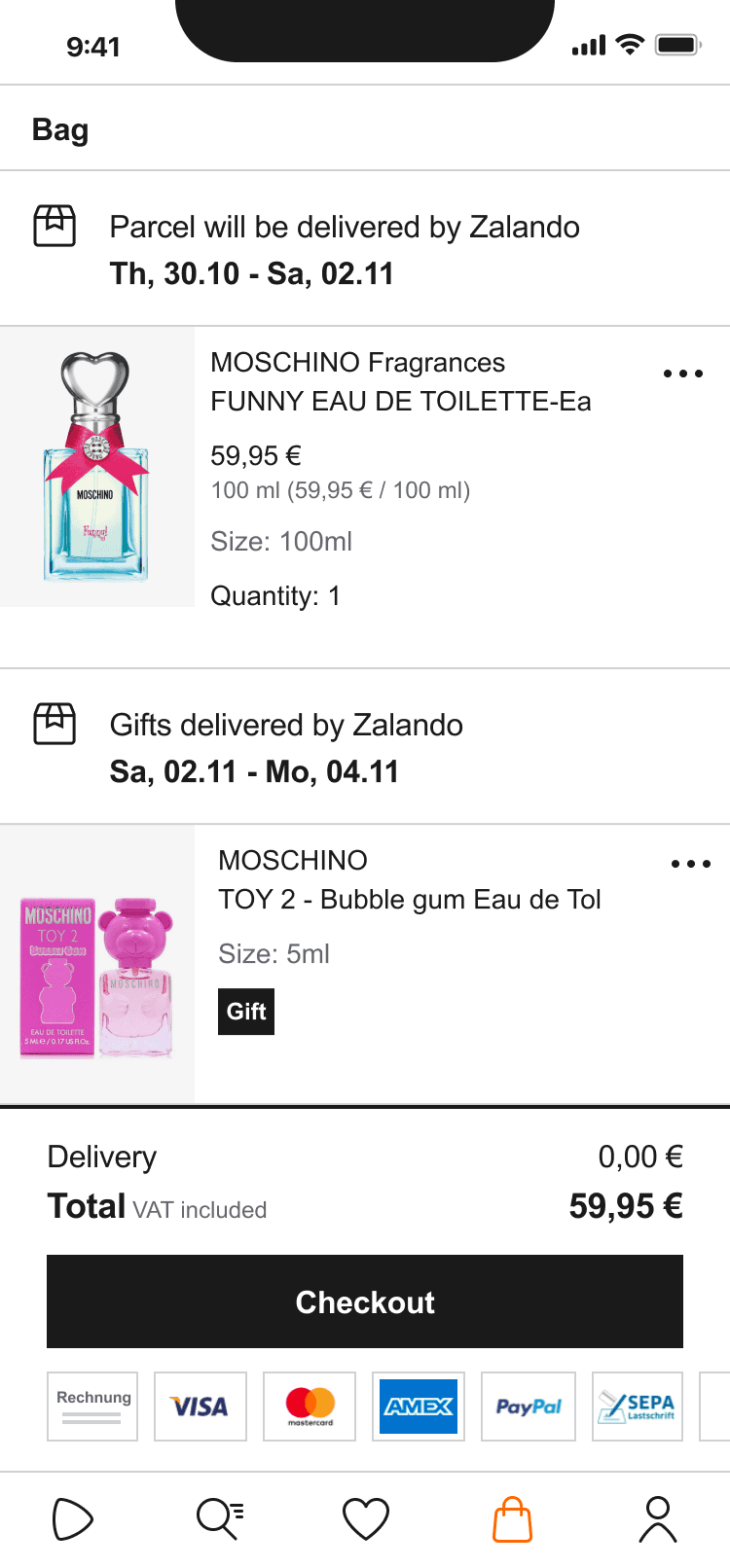
‘Free Gift’ or ‘0,00€’?
I explored how gifts could be distinguished in the cart: a ‘Free Gift’ label, a zero euro price, and a gift flag, as candidates for an A/B test.
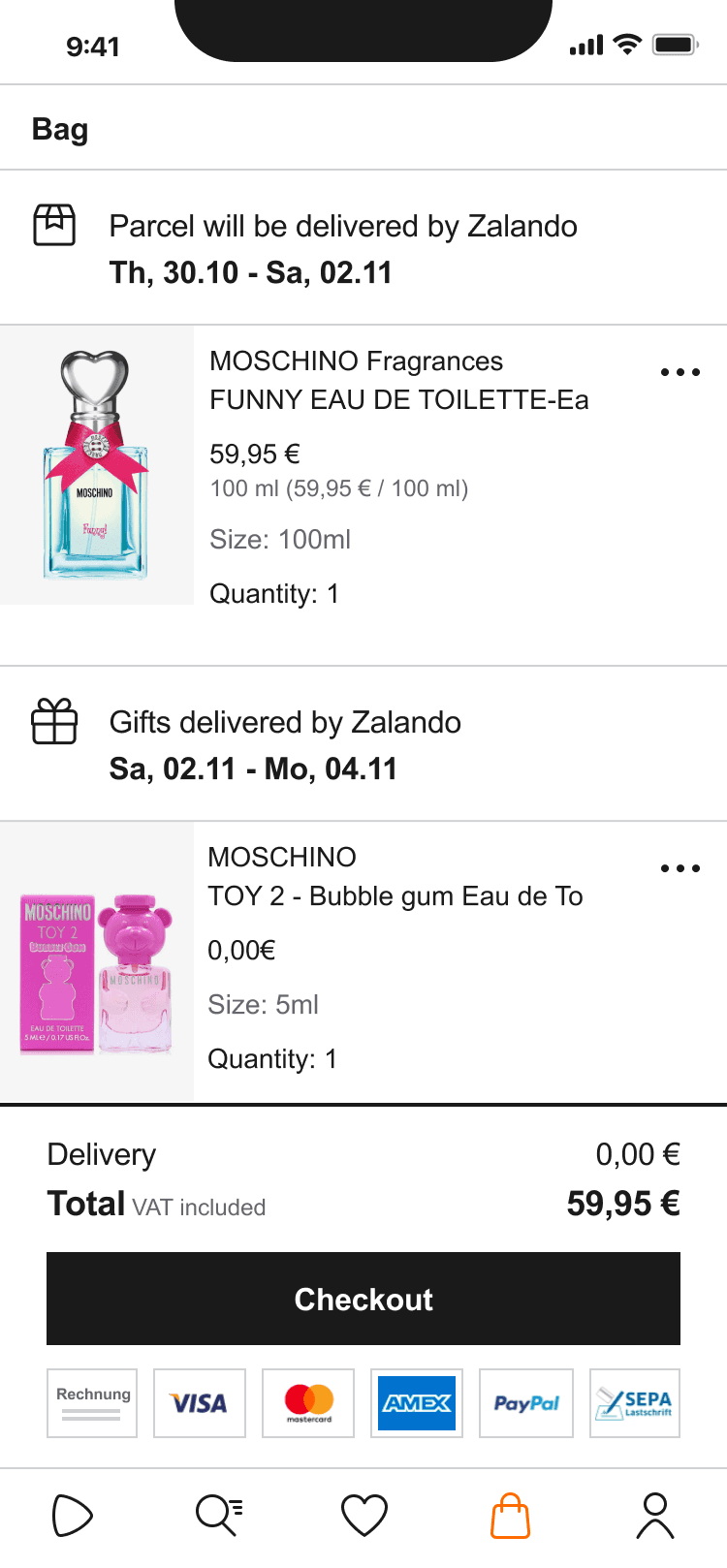
Edge case: separate packaging for gifts
If two products in the cart come from different warehouses, they are packaged separately. Due to current logistics, gifts would almost always arrive in a separate package, so this had to be visualised.
Exploring a nudge in the cart
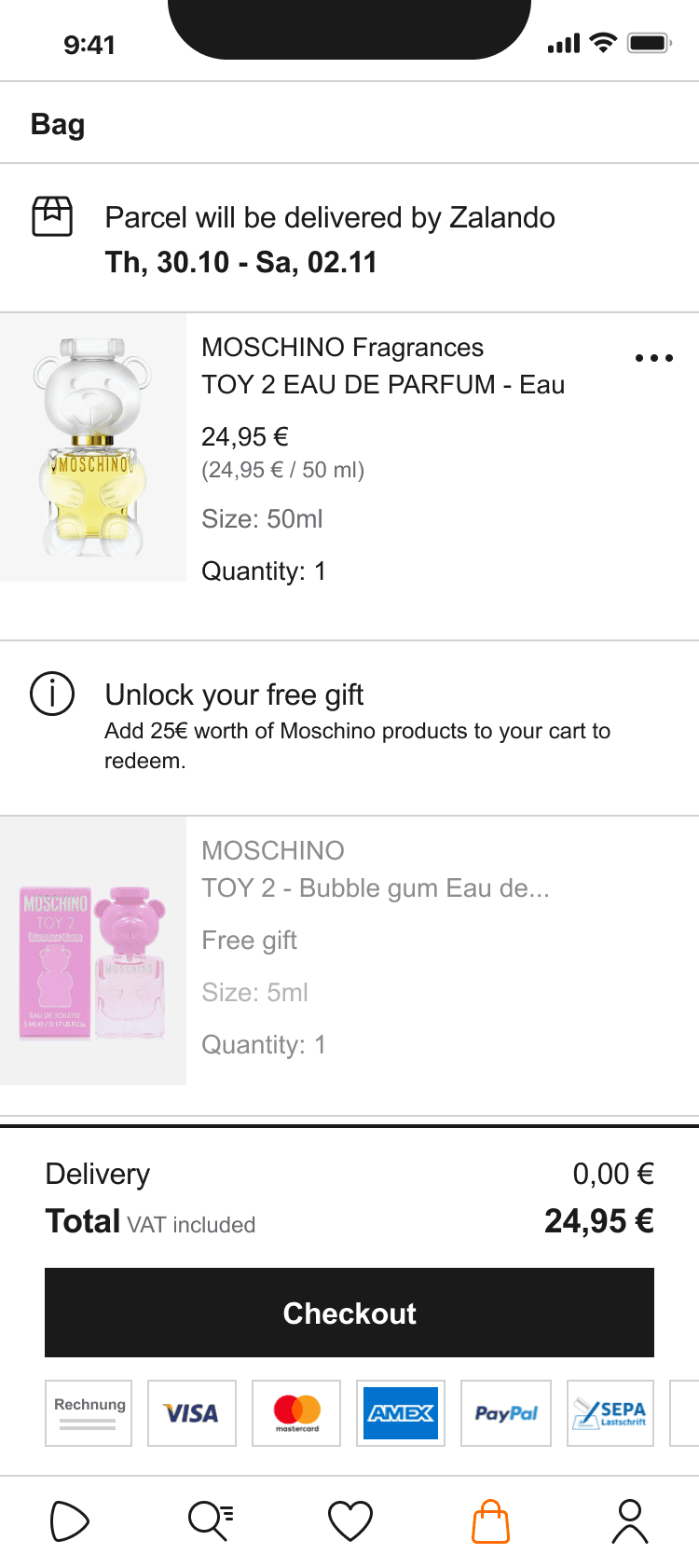
If a customer buys a product from the gifts with purchase catalogue but only almost meets the condition, they could be nudged to complete it.
While this may fulfil the business objective and inform customers about an ongoing campaign, it nudges customers into overspending, which goes against the sustainability principle.
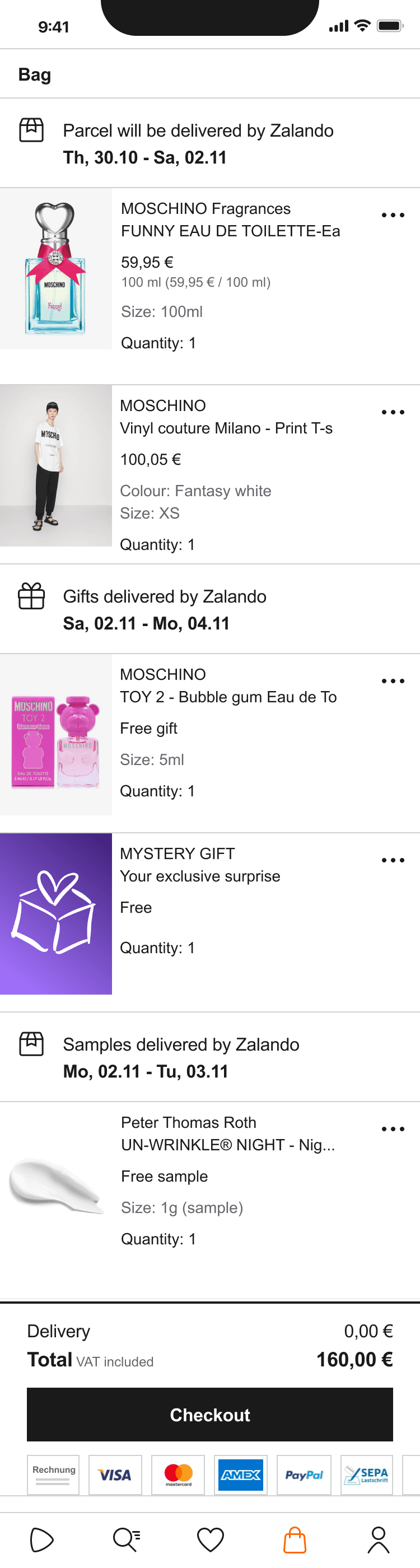
Edge case: multiple GwP campaigns and mystery gifts
I also explored what a mystery gift and multiple gifts with purchase campaigns could look like, for the edge case where two GwP campaigns run at the same time.
Edge case: samples
In the app, customers can also order up to two free samples with a purchase over 25 euros. The current layout shows a samples header with two samples underneath. This explores how gifts and samples can coexist in a cart.
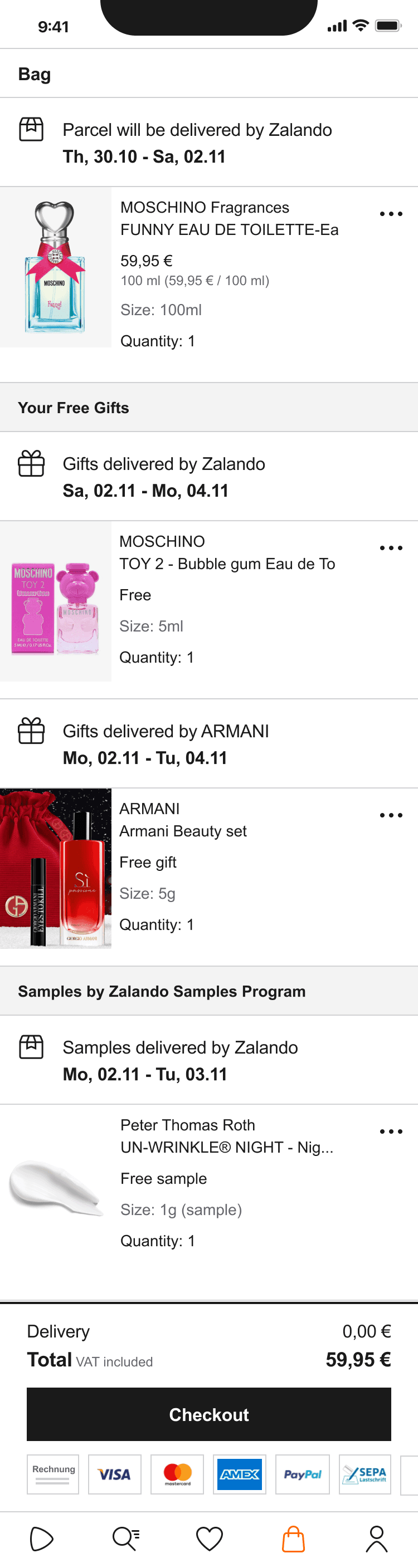
Distinguishing gifts with purchase from samples to establish hierarchy
This solution separates and better distinguishes the product cards. However, it may not apply if a gift doesn’t come in a package similar to the product.
Design check-in
The solution was far from perfect, with many unaddressed issues around logic and sustainability. Business Development worked in parallel to the solution design team on policies such as the minimum purchase value for a gift, product returns and fraudulent purchases. We wanted design leadership’s first impressions: was gifts with purchase aligned with Zalando’s principles and workstreams, and were there critical red flags in our explorations?
Further edge cases
- – Customers could meet the gift condition without knowing about the campaign, and may be alarmed by a gift in their cart
- – Customers could order products just for the gifts and then return them. Fraudulent purchases need to be handled
- – In the multiple campaign example, customers could just place a 40 euro order twice
- – Customers may not want the gift (sustainability)
- – Where will customers be informed about product returns, and what does a return mean for the gift?
- – Can customers use vouchers and gifts together? What happens if a voucher disqualifies them from a gift?
- – If customers choose a pick up point and the gift arrives later, do they go back to the pick up point just for the gift?
Second iteration of the product cart
After the design check-in and feedback from the Payments team, we reduced our scope to explorations that were realisable and in tune with the sustainability principle. At this point the solutions were purely hypothetical, pending A/B testing.
The revised scope of the cart was shaped by:
- – Leadership stressed Zalando’s core value of sustainability: no mystery gifts
- – The Payments team stressed an uninterrupted, smooth checkout flow: no nudging
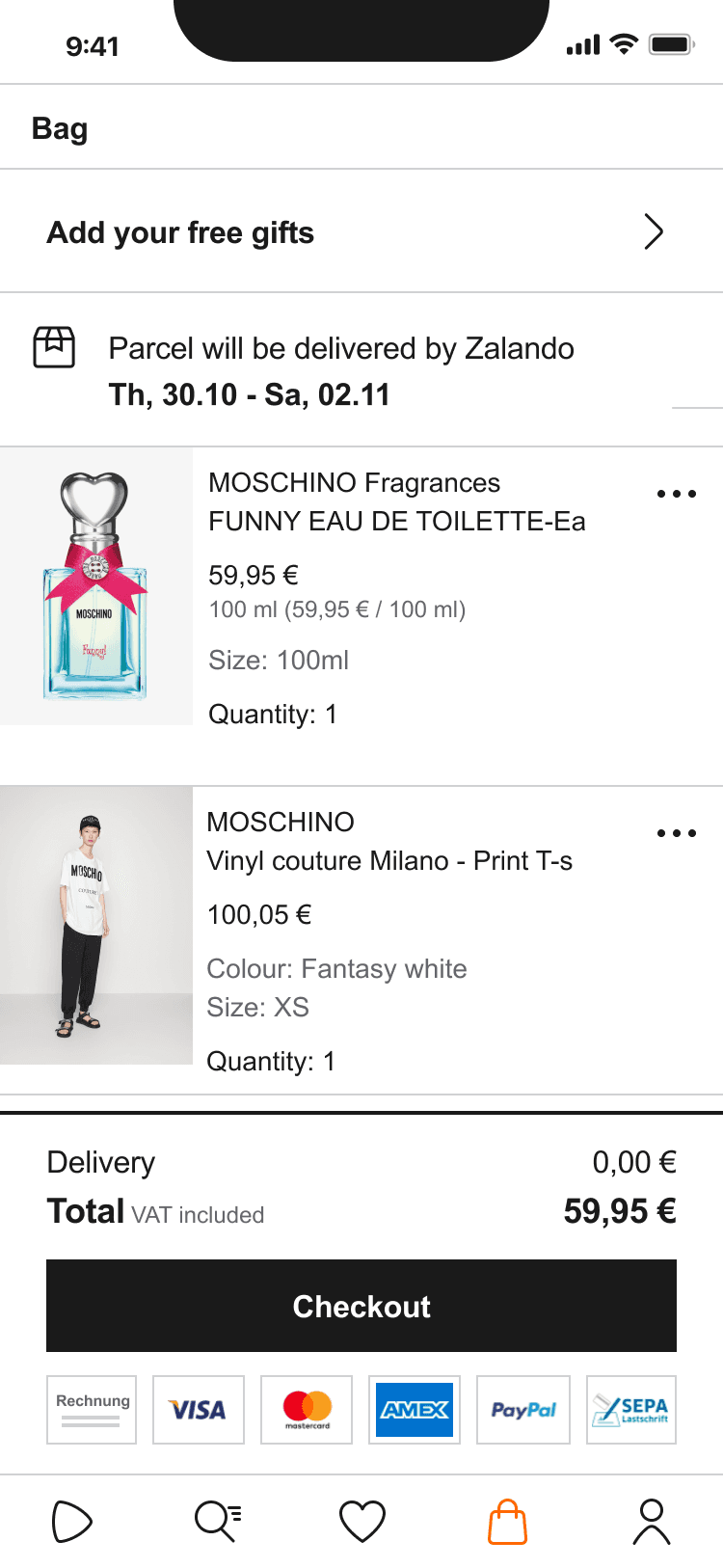
- – Exploring letting customers add the gift rather than take it out
- – Informing customers about campaigns, since customers use the cart as a wish list and can forget why a gift is in it
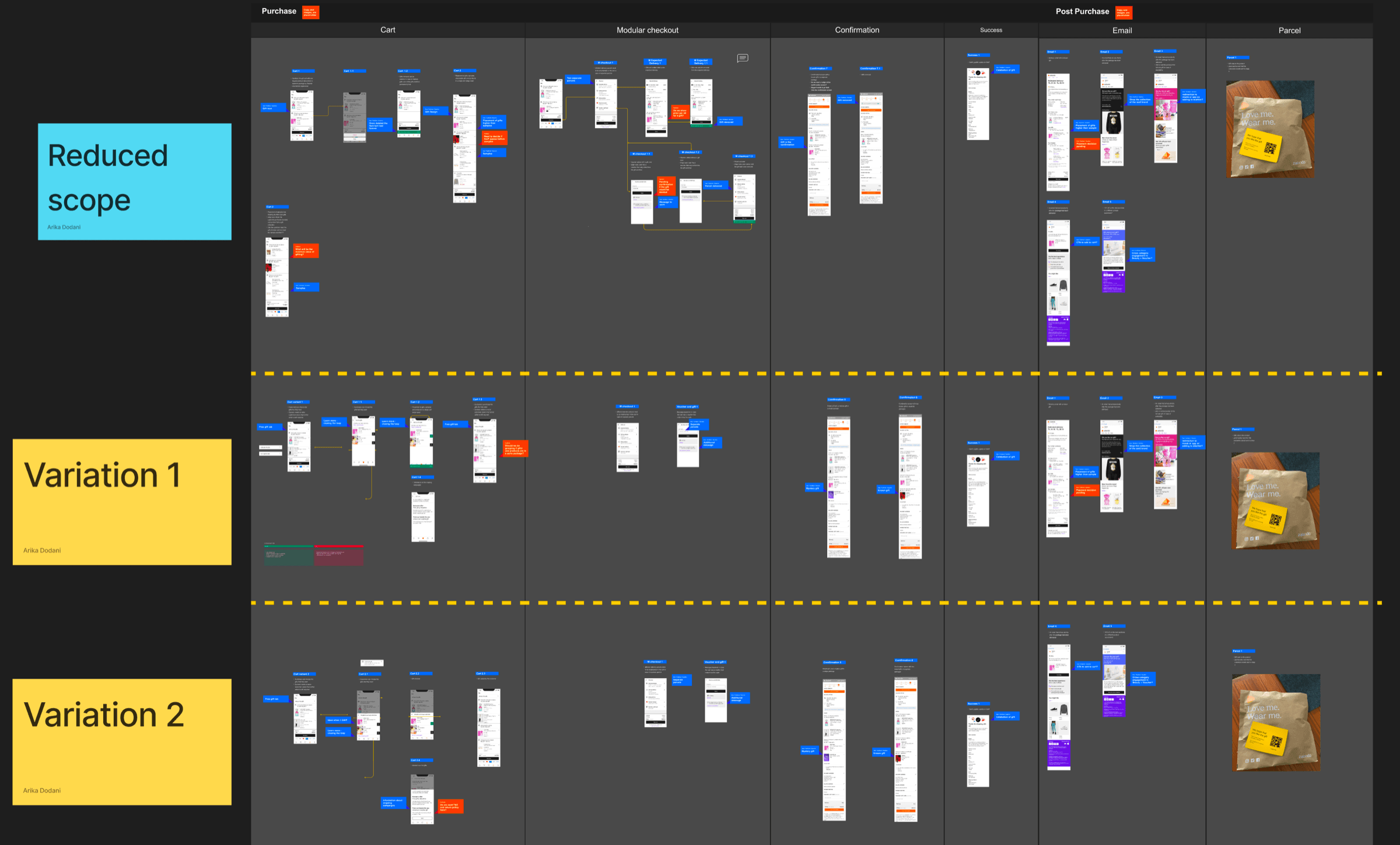
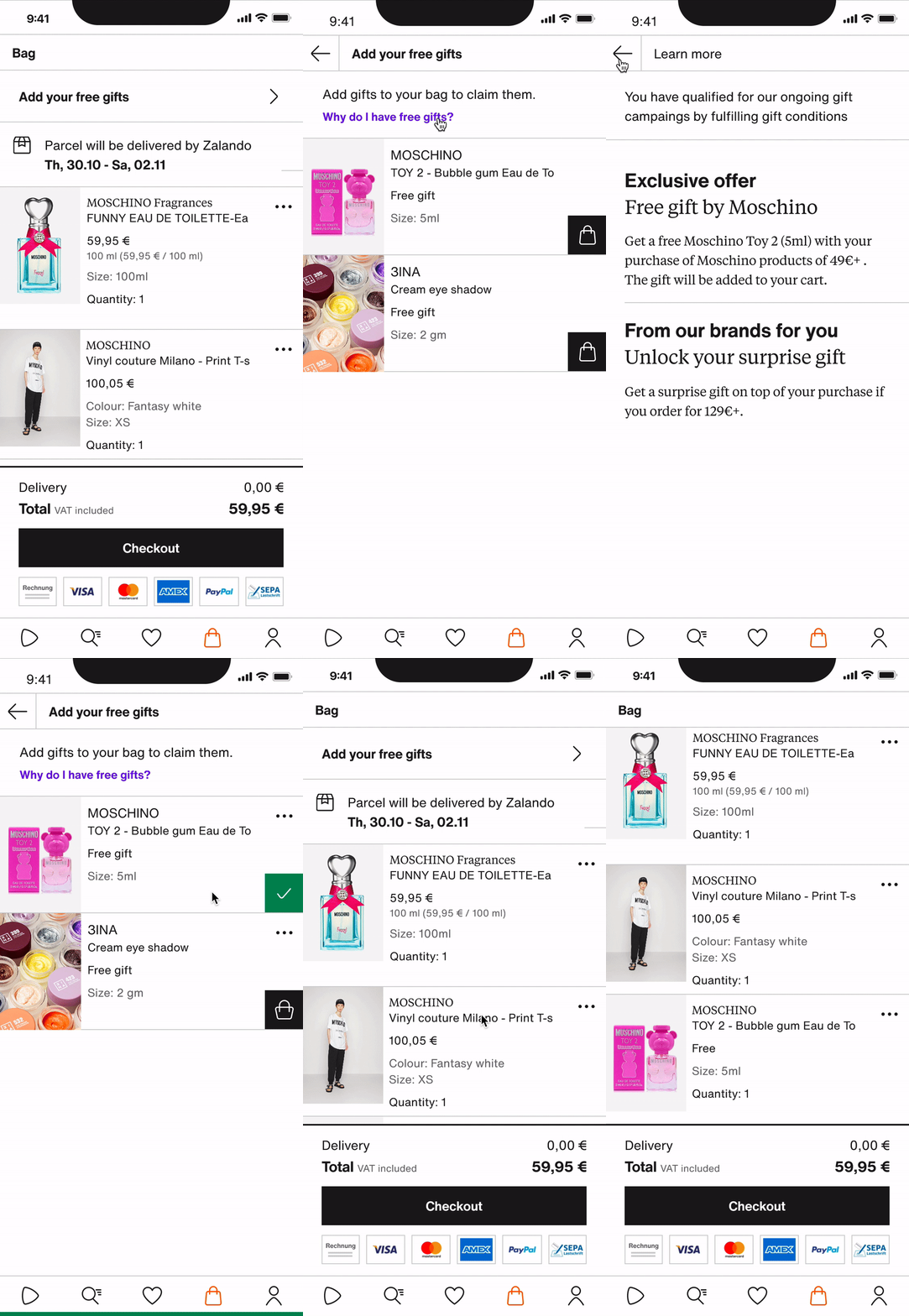
1. Adding gifts physically in the cart
This exploration keeps the cart clutter free and lets customers choose whether they want a gift.
With multiple campaigns, the main order stays in focus and customers can be informed separately about what qualifies.
Separate placement of gifts was not factored into this exploration, as it was out of scope.
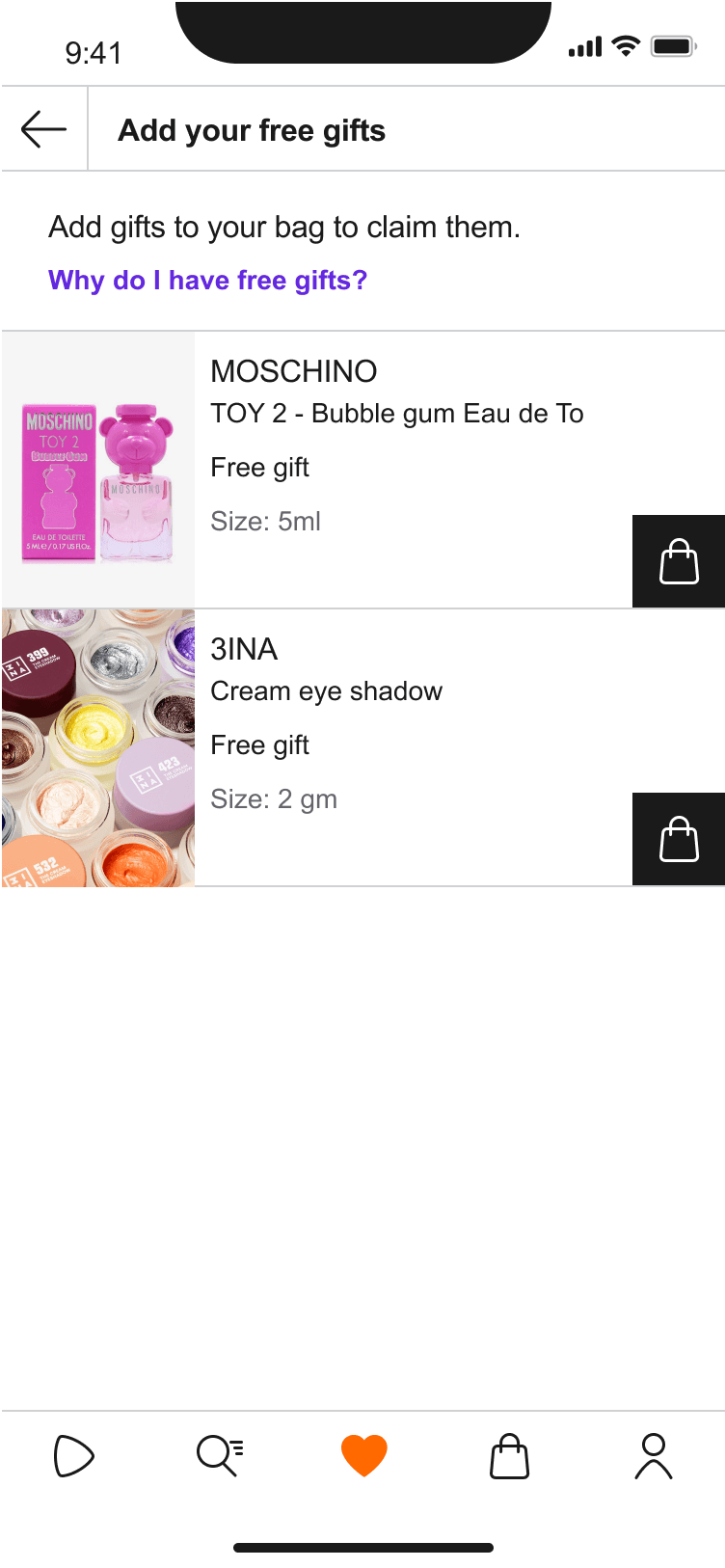
2. Selecting the gift (two variations)
Here customers choose to add gifts to their cart rather than finding them pre-added. This can be tested against the pre-added version to understand our customers’ needs.
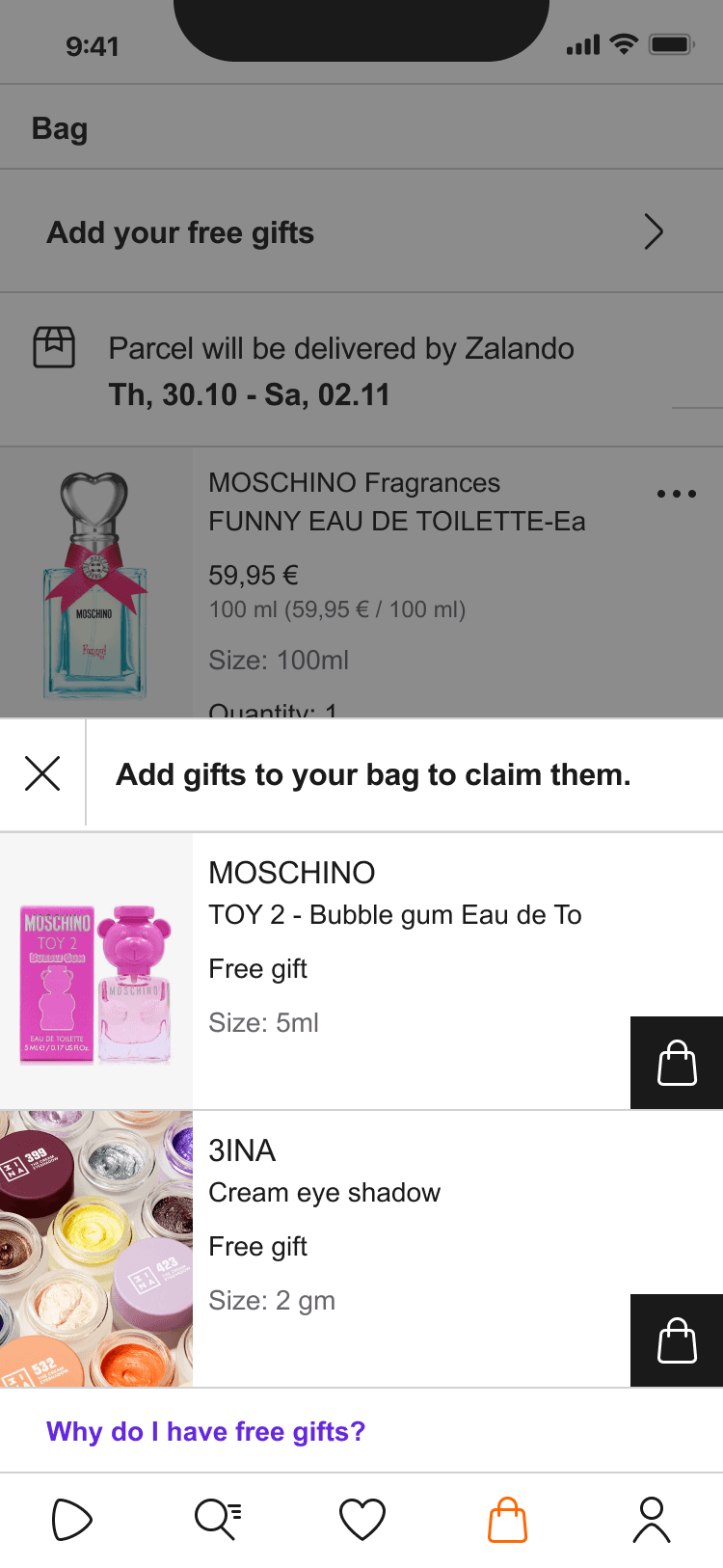
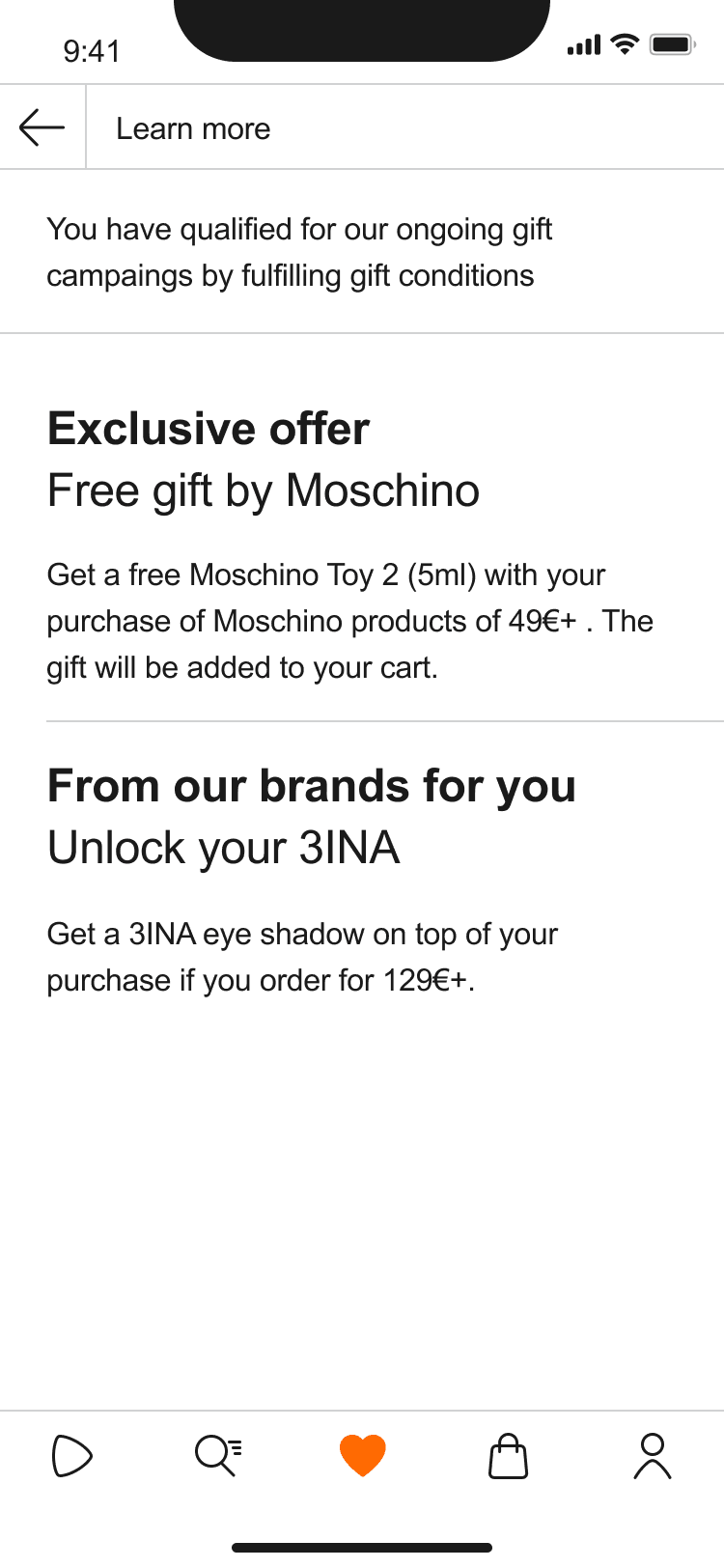
3. Why do I have free gifts?
Customers can learn more about ongoing campaigns by following the link and discovering further details.
Edge case: gifts and vouchers
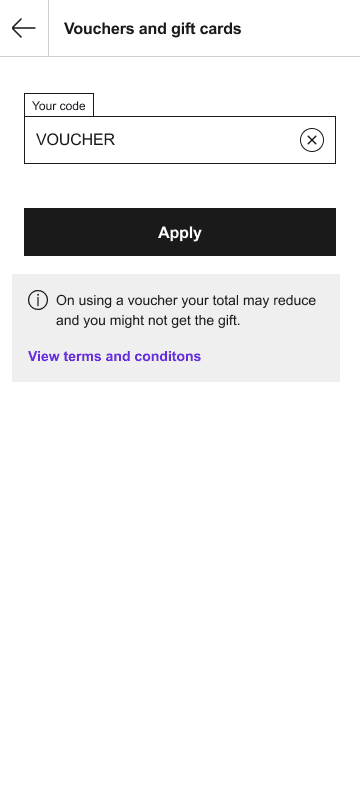
A message box in the gifts and vouchers section of the modular checkout tells customers that using a voucher means they won’t get the gift that’s already in their cart.
Customers can also review the terms and conditions.